
RAM Price Crisis 2025: Why Memory Prices Are Exploding
Introduction
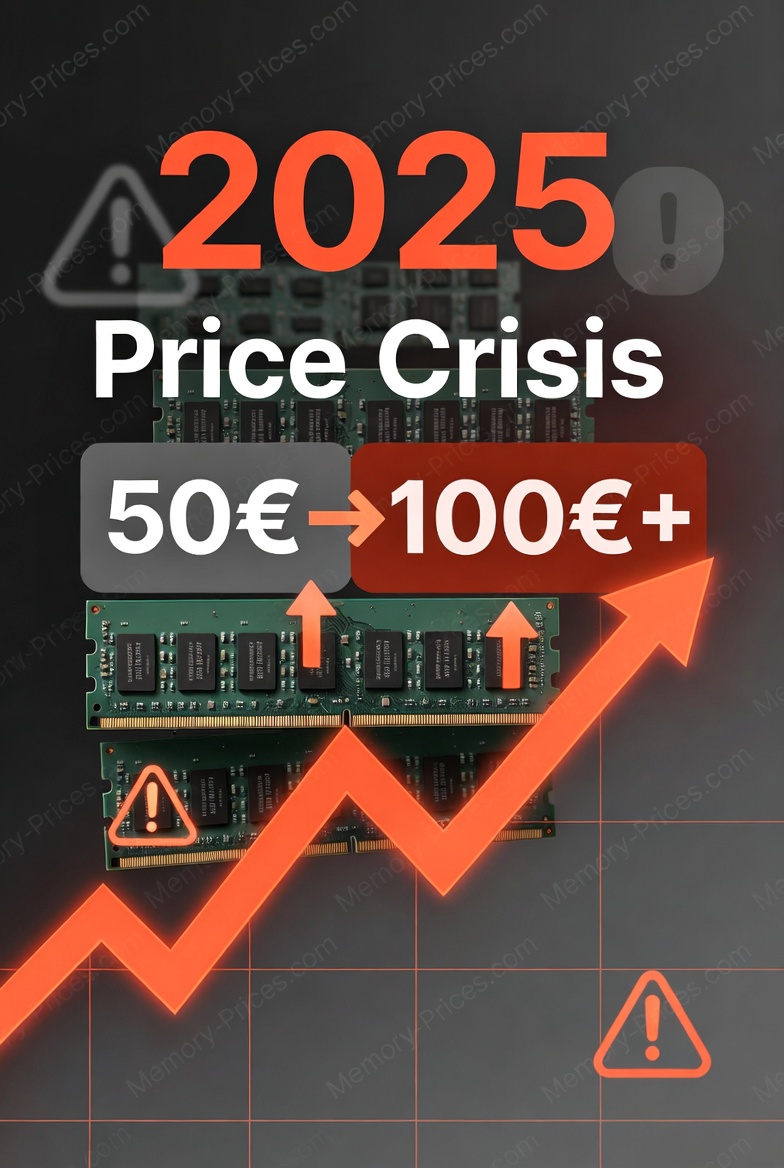
If you've been shopping for RAM recently, you've likely noticed something alarming: memory prices have skyrocketed. What was once an affordable component has become a significant expense, with DDR5 kits that cost around 50 Euros in the summer now priced at over 100 Euros – and the situation is getting worse. This article explores the root causes of the current RAM price crisis, its impact on the PC hardware market, and what consumers can expect in the coming months.
The Price Explosion: By the Numbers
The numbers tell a stark story. DDR5 memory kits with 16GB capacity, which were readily available for around 50 Euros just a few months ago, have now surged to over 100 Euros at reputable retailers. This represents a price increase of more than 100% in a matter of months. For 32GB DDR5-UDIMM kits designed for desktop PCs, prices start at 200 Euros and can quickly escalate to hundreds more, depending on the model and availability.
The price increases began in early November 2025 and have continued at an unprecedented pace. According to industry reports, DRAM and NAND flash memory prices doubled within a single month, creating a crisis that has caught both manufacturers and consumers off guard.
Root Causes: Why Is This Happening?
1. The AI Hype and Production Shift
One of the primary drivers of the current crisis is the ongoing artificial intelligence boom. Major memory manufacturers – Samsung, SK Hynix, and Micron – have been converting numerous production lines to manufacture High-Bandwidth Memory (HBM), which is essential for AI accelerators and high-performance computing systems. This shift has directly reduced the availability of standard DDR5 memory for desktop PCs.
The demand for AI infrastructure has created a massive pull on memory production capacity. AI servers require specialized memory types, and some also consume large amounts of energy-efficient LPDDR5X RAM, which was originally designed for smartphones and notebooks. This further constrains the supply of standard desktop memory modules.
2. Manufacturer Hoarding
In response to the uncertain supply situation, PC manufacturers, laptop makers, and server companies have begun hoarding memory components. Lenovo's CFO Winston Cheng revealed in an interview with Bloomberg that the company has increased its inventory of "critical components" by 50 percent above normal levels. This preemptive stockpiling is a defensive strategy, but it exacerbates the shortage for end consumers.
According to reports from Digitimes, all major Taiwanese manufacturers – including PC builders like Asus and MSI – are currently attempting to secure and stockpile memory supplies. Even memory module manufacturers themselves are struggling to obtain memory chips for their production, creating a cascading effect throughout the supply chain.
3. Market Concentration and Supply Chain Constraints
The global DRAM market is dominated by just three companies: Samsung, SK Hynix (both based in South Korea), and Micron (from the USA). Together, these three manufacturers account for more than 90 percent of global revenue from DRAM chips. This high level of market concentration means that when these companies shift production priorities, the entire market feels the impact.
Executives from several Taiwanese companies have been traveling to South Korea to meet with Samsung and SK Hynix leadership, attempting to secure memory supply capacities. These negotiations highlight the critical nature of the current shortage and the power imbalance in the memory supply chain.
4. Windows 10 End of Support
Adding to the demand pressure is the end of Windows 10 support, which has prompted many users and organizations to upgrade their systems. Modern processors from both AMD and Intel almost universally require DDR5 memory, making RAM a central cost factor in any system upgrade. This has created a surge in demand at precisely the wrong time – when supply is constrained.
Impact on the PC Hardware Market
Motherboard Sales Decline
The rising RAM prices have had a direct and measurable impact on motherboard sales. Many buyers are postponing their planned system upgrades because a modern motherboard is essentially unusable without suitable DDR5 memory. When memory costs become prohibitive, the entire upgrade decision gets delayed, leading to falling demand for motherboards across the market.
CPU Market Effects
The declining motherboard demand has also affected CPU sales, as processors are typically purchased together with a new platform. If DDR5 memory represents a financial hurdle that prevents users from upgrading their motherboards, they're also unlikely to purchase new CPUs, even if processor prices remain relatively stable. This creates a domino effect that slows the entire PC hardware market.
PC Self-Builders Hit Hardest
PC self-builders find themselves at the bottom of the supply chain priority list. Large manufacturers can negotiate better terms and secure allocations, but individual consumers face the full brunt of market prices. This has created a situation where building a custom PC has become significantly more expensive, potentially pushing some enthusiasts to delay their builds or consider pre-built systems instead.
The Outlook: When Will Prices Stabilize?
Unfortunately, industry experts warn that the situation is likely to get worse before it gets better. According to Team Group's General Manager, the RAM pricing crisis has only just started, and the problem is expected to intensify throughout 2026. The combination of sustained AI demand, production capacity constraints, and manufacturer hoarding suggests that relief may not come until 2027 or 2028.
Several factors will need to change for prices to stabilize:
- Increased production capacity for standard DDR5 modules, which would require manufacturers to rebalance their production lines
- Reduced AI infrastructure demand or increased HBM production capacity to meet AI needs without cannibalizing desktop memory
- Resolution of supply chain tensions that are causing manufacturers to hoard components
- Market adjustments as high prices eventually suppress demand, creating a new equilibrium
What Can Consumers Do?
For Those Who Need to Buy Now
If you absolutely need to purchase RAM immediately:
- Shop around carefully – prices vary significantly between retailers, and some may still have older stock at lower prices
- Consider reputable brands – while cheaper options exist from unknown sellers on marketplaces, they may come with reliability risks or long shipping times
- Buy only what you need – avoid over-purchasing in hopes of future-proofing, as prices may eventually come down
- Watch for sales – some retailers may offer periodic discounts, though these are likely to be modest given current market conditions
For Those Who Can Wait
If your upgrade isn't urgent:
- Delay your build or upgrade – waiting 6-12 months may result in better prices, though the timeline is uncertain
- Consider DDR4 systems – if you're building a new system, older platforms that support DDR4 may offer better value, though this limits future upgrade paths
- Monitor market trends – keep an eye on industry news and pricing trends to identify the best time to buy
- Focus on other components – if you're planning a full system build, you might prioritize other components that aren't experiencing the same price inflation
The Bigger Picture: Market Dynamics
The current RAM price crisis illustrates several important aspects of the global technology supply chain. First, it demonstrates how quickly market conditions can change when major manufacturers shift production priorities. Second, it highlights the vulnerability of consumers when supply chains are highly concentrated among just a few companies. Third, it shows how external factors – like the AI boom – can create ripple effects throughout seemingly unrelated markets.
For the memory industry, this crisis represents both a challenge and an opportunity. While high prices may boost short-term profits, they also risk suppressing long-term demand and potentially driving innovation in alternative memory technologies or architectures.
Conclusion
The RAM price crisis of 2025 is a complex situation driven by multiple factors: the AI boom redirecting production capacity, manufacturer hoarding in response to uncertainty, market concentration among a few key players, and increased demand from system upgrades. The result is a perfect storm that has pushed memory prices to unprecedented levels.
For consumers, this means difficult decisions about when and how to upgrade their systems. PC self-builders are particularly affected, finding themselves at the end of a supply chain that prioritizes large manufacturers. The outlook suggests that relief may not come until 2027 or 2028, making this a long-term challenge rather than a short-term blip.
As with any market crisis, the situation will eventually stabilize as supply and demand find a new equilibrium. However, the path to that equilibrium may be painful for consumers who need memory now. The best strategy is to carefully evaluate your needs, shop wisely if you must buy, and consider delaying non-essential upgrades if possible.
The memory market has always been cyclical, with periods of high and low prices. What makes the current situation unique is the combination of factors driving it – from AI infrastructure demands to supply chain disruptions. Understanding these dynamics can help consumers make informed decisions during this challenging period.